AADA chief acknowledges industry disruptions but points to green shoots of new direction for industry
For the first time since the beginning of the COVID-19 pandemic, the nation’s top automotive dealers have gathered in Queensland to attend AADA 2022, co-presented by carsales.
More than 400 delegates will attend a variety of forums, workshops and events over the course of the two-day Australian Automotive Dealer Association event, with chairman James Voortman acknowledging the challenges of the previous two years in his opening remarks.
“Back then I’d never worn a face mask. I’ve never heard of Zoom, and I didn’t think it was possible that we could close our country’s borders to the rest of the world, let alone lose the ability to travel in our own country,” he told delegates.
He also noted the “broken” state of the car retailing industry at the time, with low profitability and oversupply hamstringing dealerships.
“Profitability was less than 1%,” he said. “A third of dealers were making no money at all. Supply was, rampant, but demand was not. We had an incentive-driven race to the bottom of discounting.
“Fast forward two and a half years, and it couldn’t be more different.”
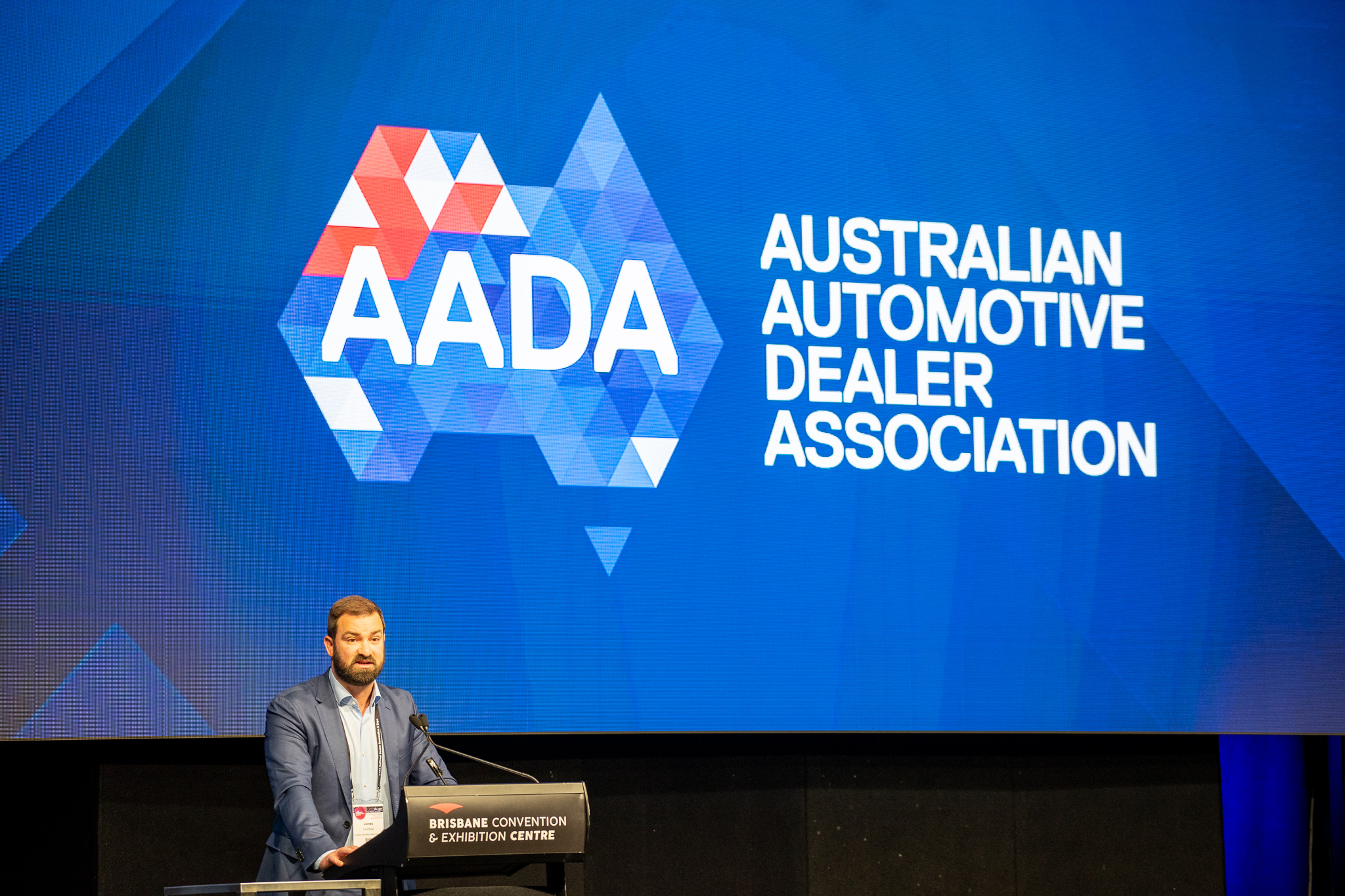
Voortman (above) spoke to “supercharged demand” and the switch away from public transport as key moments in a disruptive period for the industry, along with the boom in vehicle-dependent industries like goods delivery and low cash rates.
“All of this led to massive demand and while demand increased supply went the other way,” he said. “We saw initial factory closures at the onset of the pandemic, which spiralled into a wider shortage of semiconductors.”
The demise of local manufacturing has also exposed the vulnerability of the right-hand-drive market to manufacturing forces, according to Voortman, while a global skills shortage has also had an impact.
MORE How Finance Extension can potentially help close sales faster, and with more margin
“And while the situation has put an end to the discounting wars and greatly assisted dealer profitability, it has created a very difficult operating environment for many of our members who have to deal with customers, waiting for vehicles,” he said.
“We will be having discussions with the federal government around creating a skilled migration program that is both more responsive and more affordable for businesses in our industry.
“But there are strategies we can put in place to attract and retain staff. And one of those is talking to our OEMs, working with them on issues, such as capped price servicing and warranty processes, because those affect our ability to both retain and remunerate our staff adequately.”
Voortman also addressed the emergence of the agency model since last the convention was held, along with the demise of the Holden brand.
“Our federal government has watched the situation and in the course of the past two and a half years, they’ve introduced not only one but two tranches of automotive franchise reforms,” he said.
He pointed to the ascension of the ALP to power as a harbinger of change, particularly around climate action.
“The election results have brought climate change to the fore in a way it hasn’t been before in this country,” he said. “And our industry, frankly, will be asked to do more in relation to emissions reduction. This means we’ll probably be focusing on areas such as vehicle emissions standards. We’re one of the only countries in the industrialised world not to have such a standard.”
When it comes to electric vehicles, the AADA can see both sides of the coin, with Voortman suggesting that while incentives at state and federal level might only be the beginning, the dealer industry needs to be “realistic about the challenges involved.”
“The supply chain issues we currently experiencing with cars apply equally, if not more to EVs, which require even more semiconductors than traditional ICE vehicles, they also require a range of critical minerals, which will require a ramp-up of mining activity.
Voortman was reflective in his AADA 2022 conclusion, acknowledging that supply lines are still a moving target and that the industry would be best placed to avoid an oversupplied new vehicle market in coming years.
“The last two years have seen a profound change to our businesses and the regulatory settings in our country. The question is where do we go from here?
“And the answer is, I really don’t know because the last two and a half years have taught me anything. It’s the folly of making predictions.”