The latest Federal Budget included some good news for Australian car dealers and brands.
Handed down with the objective of stimulating business investment, boosting consumer spending and creating more jobs in the wake of COVID-19, the budget is based on some big assumptions – most notably that a COVID-19 vaccine will be widely deployed in Australia by late 2021.
That notwithstanding, dealer-friendly budget highlights included:
1. $74.5M Future Fuels Fund
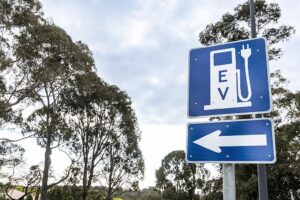
The Federal Government will invest $74.5M into the take-up of emissions-free vehicles across Australia, with the plan is to subsidise business adoption of electric vehicles and corresponding infrastructure.
2. Full expensing of eligible capital assets
Businesses with aggregated annual turnover of less than $5B will be able to deduct the full cost of eligible capital assets acquired from October 6, 2020 (7:30pm AEDT) and first used or installed by June 30, 2022.
3. Consumer income tax cuts
The Government will bring forward the tax cuts it had planned to introduce on July 1, 2022, to July 1, 2020. Around 11M Australians are expected to see some financial benefit from the tax cuts.
4. JobMaker Hiring Credit to boost employment
Businesses who hire eligible young people will receive a $200 per week per person wage subsidy when they hire a person aged 16 to 29 years, or $100 per week if they hire an eligible young person aged 30 to 35.
5.Small business tax concessions
Tax concessions currently available to small business with annual turnover up to $10M have been extended to businesses with turnover up to $50M. Eligible firms will have access to up to 10 small business tax concessions, including deductions of certain start-up and prepaid expenses, exemptions from the 47% FBT tax on car parking and multiple work-related portable electronic devices (Ie: phones and laptops).
6. Mental health aid for small business owners
The Federal Government will provide $6.5M in 2020-21 to support mental health and wellbeing of small businesses impacted by COVID-19. This includes a $4.3M budget commitment to expand current mental health program for small business owners, providing access to free one-on-one telehealth sessions with specially trained mental health coaches.
7. Transport infrastructure
Transport infrastructure projects earmarked for funding include:
$490M for the Coffs Harbour Bypass in New South Wales
$528M for upgrades to the Shepparton and Warrnambool rail lines in Victoria
$750M for stage 1 of the Coomera Connector in Queensland
An additional $80M for the Wheatbelt Secondary Freight Network in Western Australia
$136M to progress the Main South Road Duplication in South Australia
$65M for the Tasman Bridge Upgrade
$46M for the National Highway Upgrades in the Northern Territory
$560Mfor the Singleton Bypass on the New England Highway in NSW
$100M for access upgrades to the Strzelecki Track in SA
$16M for upgrades to the Goldfields Highway and the Broome-Cape Leveque Road in WA
$120M for upgrades to the Carpentaria Highway in the NT.
More spending on Aftersales?
Commenting on the budget measures, Michael Holmes, Executive Director – Dealer at carsales called the changes “welcome news for Australian car dealers”.
“The boost to consumers’ pay packets should result in more money flowing to auto parts and accessories sales, as Australians use their cars more and take advantage of domestic travel opportunities, including auto-based travel.”
“With these announcements and sustained macro trends such as greater car usage, there’s certainly opportunity for dealers to increase revenue from their Aftersales operations,” adds Holmes.
Increased spending on automotive parts and accessories was also foreshadowed by Bapcor, a leading provider of automotive aftermarket parts, accessories. The company recently announced strong sales growth as Australians spent more on their cars in September.
In positive news for the industry, consumer confidence has also soared to its highest level in more than two years after the budget announcements.
That’s not to say the auto sector was entirely happy with the measures. To the disappointment of many, there were no revisions to the punitive luxury car tax, the introduction of cash for clunkers schemes, nor incentives to facilitate the adoption of electric vehicles.
One brand decided to go it alone, with BMW responding with an announcement of its own; a $1500 discount for the purchase of a brand new electric BMW or Mini for business use.
Established in Queensland in 2016 but now based in Adelaide, the company will use the money primarily to develop bi-directional vehicle-to-grid (V2G) recharging ability.
The company plans to launch with two models, the Cargo light commercial and Yewt Ute in October 2021, and follow up with the Urban passenger car in 2022.