Potential EV buyers are still fearful of the cost to replace vehicle batteries, but long warranties and smart tech should allay concerns
The latest tranche of electric vehicle buyer data from carsales shows a populace increasingly concerned about rising petrol prices, and they will happily swap brands to get into an EV.
However, a fear of the cost to replace EV batteries in electric vehicles is being raised as a barrier to entry.
The fourth in a series of carsales research pieces which surveys current and prospective EV owners has revealed that while the cost of buying a new EV is still a significant barrier, that level of concern has decreased.
And even though demand for EVs continues to exceed supply, there are now more EV owners than ever, according to the research.
However, it’s the issue of the cost to replace EV batteries that still has people most concerned, with 72 per cent of respondents concerned about the cost of replacing a battery in an EV.
The findings are somewhat surprising, given that every EV on sale today offers a battery warranty that matches or in many cases exceeds that of the rest of the vehicle.
Here are some answers that can be used on the dealer floor to allay those fears with potential EV customers
EV batteries – an overview
Think of the structure of a typical EV as a skateboard, with the deck comprising the battery pack and the trucks (the bits that hold the wheels) as the axles of the car.
The majority of EVs have an electric motor at one end of the skateboard, and some will have one at each end.
The size of the pack depends on the range required – more batteries mean more range, but also results in a bigger pack.
Just like a fuel tank in a regular ICE vehicle, the battery array needs to have a high degree of crash protection built into it, while cabling and battery cooling also needs to be factored in.
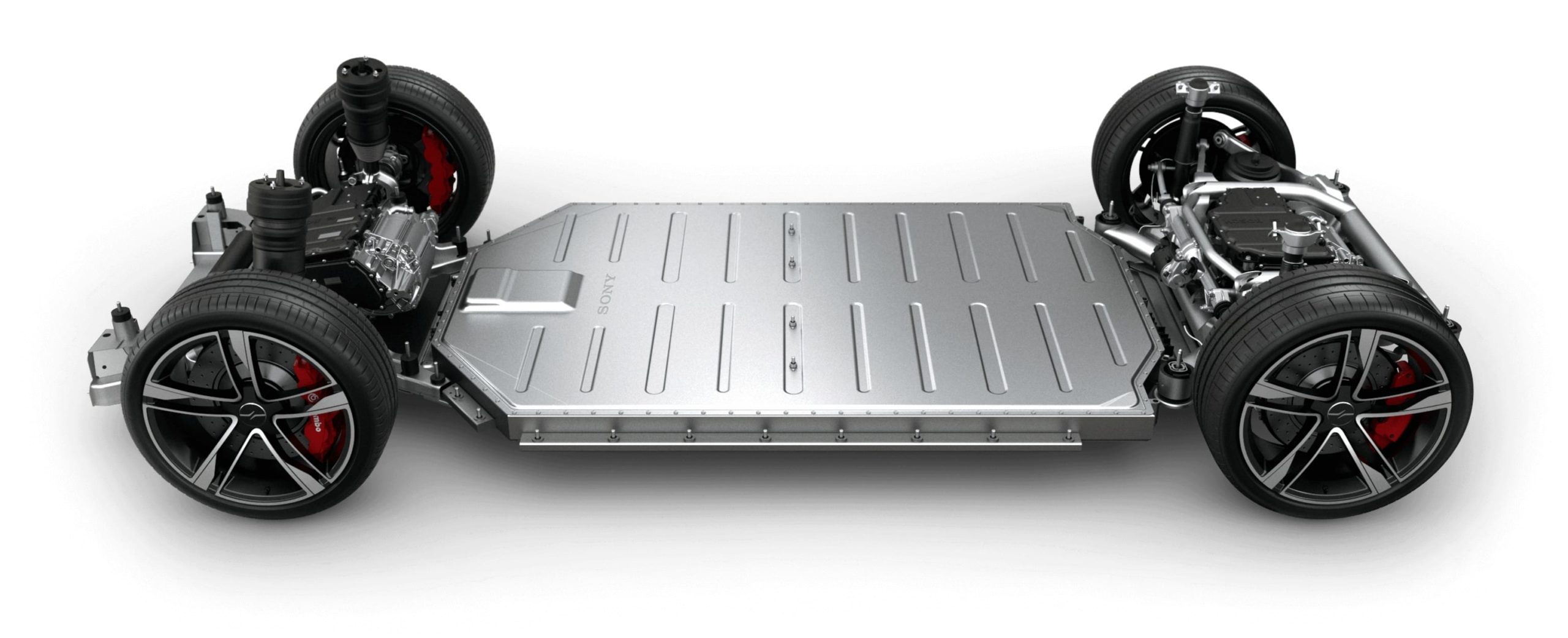
A steel or alloy frame houses several battery packs, or modules, resulting in what looks like a large metal mattress.
As a rule, EV battery packs are built not to be repaired, which helps to ensure the integrity and safe operation of the high-voltage battery in all types of conditions.
Some, however, like the battery array in the MG ZS EV, can be accessed to allow the replacement or repair of individual modules.
Can I swap my EV battery?
Speaking in general terms, battery packs can be replaced in electric vehicles as a service item.
The cost to replace EV batteries obviously varies across the manufacturer spectrum, but the average cost of an EV battery for a modern vehicle would be somewhere between $12-20,000 before installation, depending on size.
Compare this to a modern dual-clutch transmission unit in an ICE-equipped vehicle, which averages around $8-10,000.
However, given that the battery pack is built to last for the average life of the vehicle it’s fitted to, it’s highly unlikely that a customer will ever need to replace it.
And if they do, it’s more than likely that the replacement will be covered under warranty. Most battery pack warranties match or exceed the general vehicle warranty, though almost all are limited in terms of the number of kilometres the manufacturer will cover.
High-voltage battery warranties for EVs sold in Australia

The real cost of EV ownership
If a customer is concerned about the cost of replacing an EV battery, it’s worth discussing with them the overall picture of electric vehicle ownership versus ICE vehicle ownership.
The upside of electric vehicle ownership is that a new EV simply doesn’t have the same volume of parts on board that require service or replacement.
An electric motor, for example, is far simpler and cheaper to build than a modern ICE engine, while EV transmissions are also vastly less complex, often comprising of a single gear rather than six, eight or even ten.
EV motors and transmissions don’t need regular fluid changes, adjustments or rebuilds over the course of their operating life, either.
The flip side is that the high-voltage battery is the single most expensive item in a typical EV; on average, it can equate to a third of the total cost of the vehicle.
And once a high-voltage battery’s capacity drops to less than 70 per cent (in most cases), it will need to be replaced.

However, battery packs are designed to last for the average life of the vehicle they are installed in, which negates the potential of a new EV owner ever needing to worry about replacing the battery.
On-board battery management software constantly monitors battery condition and controls the rate of charge coming into the battery, too, which helps to prolong battery life.
And as over-the-air software updates become more common, carmakers can more easily ensure that an EV’s operating systems are doing a good job of caring for the battery.
Safety first
Finally, carmakers are spending billions of dollars making the move to EVs – and ultimately, the customer will be the winner.
Safety ratings are in front of mind for OEMs moving into the EV space, and the onus is on them to ensure that the battery packs in their EVs are as safe and reliable as possible.
The follow-on here is that an OEM is far more likely to be proactive when it comes to warranty queries on EV batteries, which means you should be able to get the customer back on the road much more quickly and at no cost to them.
[author] [author_image timthumb=’on’]https://editorial.csnstatic.com/editors/tim-robson-author.jpg[/author_image] [author_info]Tim Robson[/author_info] [/author]
Access the carsales research library by clicking HERE