Manufacturer’s PHEV white paper offers industry-wide learnings
Mitsubishi Australia recently slammed the federal and state governments via its ‘The Road to Net Zero Emissions – How PHEV (Plug-In Hybrid Electric Vehicle) technology can fast-track Australia to an EV future’ white paper.
But while the shot at Canberra and other governments dominated recent industry headlines, deeper reading of the report reveals some practical and thought-provoking propositions for dealers selling PHEVs…
Here are our five key takeaways.
1. PHEVs are a bridging technology – but they work right now
Beyond championing its own PHEV range, Mitsubishi’s insights can be applied to any brand/dealer with PHEVs in its current (or future) portfolios.
The Japanese manufacturer’s research revisits often-quoted EV barriers to entry in this country, including:
- Range Anxiety
- Lack of supporting infrastructure
- Limited choice of ‘(electric) vehicles offering drivers broad functional utility’
- Cost barriers
By utilising a (usually) smaller electric drive battery in conjunction with an ‘efficient’ combustion engine PHEVs can largely dissipate range anxiety; you just find the next petrol station as with a normal car.
Of course, this ability to refuel renders the electric infrastructure issue moot, while popularity of SUV-based PHEVs such as Mitsubishi’s Outlander and new Eclipse Cross demonstrates broad functional utility is the name of the PHEV game.
By largely adapting existing ICE vehicle systems and using smaller battery packs, production and purchase prices are also reduced over pure EV options. For example, the BMW X3 xDrive30e PHEV starts from $104,900 plus on-road costs, against the upcoming iX3 battery-electric model at $114,900.
While savings between EV and PHEV are noticeable, the current $46,000 PHEV average purchase price makes them more expensive than conventional ICE counterparts, which currently average a $41,000 purchase price.
Bottom line: PHEVs offer a ‘best-of-both-worlds’ solution. Mitsubishi’s research indicates its PHEV owners are driving emission-free for 84 per cent of their daily commute (national average is 32km per day), without the EV charging anxieties. Drivers of other PHEVs can expect similar duty cycles.
2. PHEVs beat EV on cost, while adding convenience
It’s not only on dealer forecourts where consumers can save by choosing a PHEV over a full EV.
The battery packs are necessarily compact compared to full EV systems, meaning faster recharge times and less cost per charge, while realistically being capable of time-efficient recharge on a domestic socket.
Limited ICE engagement (16 per cent during the daily commute, according to Mitsubishi) also means improved average fuel economy, allowing the vehicle to travel further between traditional fills.
Mitsubishi’s research estimates that the average two-car Australian family would save at least 30 per cent on its weekly fuel bill. Users with access to their own renewable energy save more by removing standard recharge costs.
3. Australia has the highest solar power uptake in the world
Furthering PHEV viability is the ‘Solar PV and batteries’ report by energy.gov.au that indicates Australia has the highest home solar power uptake in the world.
According to the survey, some 2,897,835 small-scale solar systems have been installed across Australia at 31 July, 2021 – that’s around 30 per cent of Aussie households.
Although the estimated payback period for a solar installation is between three and five years, it’s evident the lure of off-grid, sustainable power supply can support PHEV uptake while appropriate out of home infrastructure is developed for a full EV future.
4. An increased focus on ‘whole of life’ emissions
OEMs are evolving their electrified messaging to better answer questions around just how many emissions go into producing these drivetrains… and disposing of them when the time comes.
Mazda’s ‘well-to-wheel’ philosophy has formed the backbone of its SKYACTIV movement since 2007, seeking reduced emissions at every lifecycle stage.
In 2020, Mitsubishi released its New Environmental Plan that similarly uses Life Cycle Assessment, intending to tackle climate change, resource circulation and pollution prevention. Its aim is to reduce CO2 emissions from new vehicles by 40 per cent by 2030 (against 2010 figures), with a similar reduction in business activities (compared to 2014).

5. EV transition means fresh opportunities for Aussie manufacturers
Beyond the main argument of PHEV versus EV, the alternative-fuel future offers opportunity for Australian ingenuity, and not only in infrastructure development.
Mitsubishi’s report calls out Australia’s natural resource sector and its access to quality lithium deposits. On-shore conversion into locally-manufactured battery packs would reduce transport CO2 while creating ongoing jobs in advanced mining and manufacturing fields.
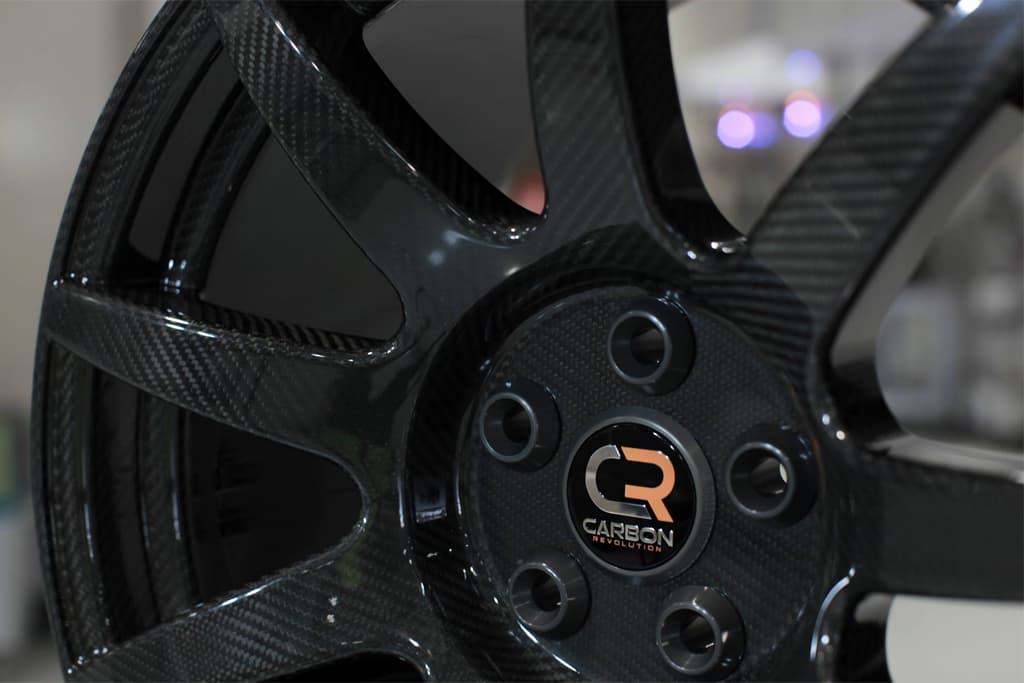
Further, emerging advanced manufacturing business such as Carbon Revolution and its carbon fibre technology can assist OEMs with further reducing emissions, thanks to its ultra-light carbon fibre wheel technology.