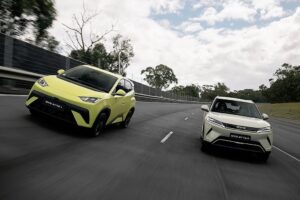
Australians are switching on to Electric Vehicles (EVs) slowly but surely. Despite supply issues, a record number of electric and electrified vehicles will be sold in 2021 and that trend will continue.
Yet local consumers continue to call out key factors that temper EV sales – above all, lack of EV infrastructure.
Boston Consulting Group (BCG) analysis shows that this will require the installation of 100,000 to 200,000 public charging points in Australia over the next ten years.
But it’s not just the chargers that matter; it’s also other infrastructure that EVs and their drivers require. Below are five areas that Australia needs to get right for EV charging to best serve motorists.
Residential on-street parking
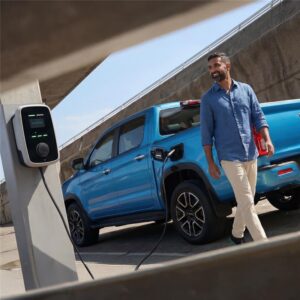
The most convenient place to charge a personal vehicle is at home. For those with the luxury of off-street parking, that is usually a simple matter of installing a charging port or running a cable to an ordinary socket. Alas, many Australians don’t have that option.
There are many ways early adopters have worked around this issue but providing a convenient and reliable way for people without off-street parking to charge near their home will be essential to the mainstream adoption of EVs.
Councils play an important role in facilitating on- and off-street parking. However, it can be difficult due to a ‘chicken-and-egg’ dilemma of councils seeing the EV charging infrastructure installations as a waste of rate-payer funds, given the current level of EV uptake.
On the other side, residents are hesitant to purchase an EV until there are more charging options.
Councils need to take leadership to break this cycle.
A great example is the City of Port Phillip which is trialling pop-up kerbside EV chargers in Melbourne.
Public fast charging sites
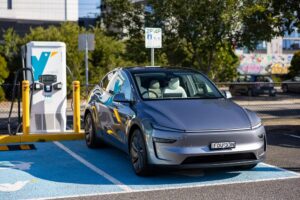
While most private vehicle charging needs will be met at or near the home or workplace, public fast chargers will have an important role to play.
Overnight home or depot charging is sufficient for most needs, but for long trips or commercial vehicles that spend a lot of time on the road, top-ups are required during the day… and the faster the top-up, the better.
Two of the key challenges facing companies entering the public fast charging market are the high upfront costs and uncertain revenues of charging sites. These impact charging infrastructure owners most directly, as they need to purchase expensive equipment and possibly invest in grid upgrades upfront, when there is still high uncertainty over the revenue they’ll generate from that station.
In addition to the uncertainty around the speed of Australian EV uptake, there are also risks for first-mover companies, such as competitors installing a competing site nearby and splitting the customer base.
It is also unclear what price customers will be willing to pay for fast and conveniently located charging. Theoretically, it should be possible for companies to demand a premium for such service, but consumer willingness to pay has been anchored low with Tesla fast charging initially being free and many others not charging much over household electricity rates.
Companies might be tempted to wait and see how this plays out, but it’s the early movers who take the risks and secure a foothold in the market who are likely to win in the long run.
To do so successfully, companies need to choose the right sites where throughput is expected to be high and may want to partner with others to spread the risk.
The grid
One of the largest and most variable costs (upfront and ongoing) for public fast-charging sites relates to grid connection. If the chosen site is some distance from the grid, or local infrastructure cannot handle the additional load, the grid upgrade costs can easily render the charging site economically unviable.
Once the site is up and running, ongoing costs are a constant concern. If a charge point operator is paying a demand charge –which is based on the maximum demand in a chosen period –then costs can skyrocket. Another example: If all fast chargers at a site are used at the same time, even once in a billing period, yearly profits could be wiped out if the power contract hasn’t been negotiated properly.
These issues will hopefully be resolved through collaboration between electricity networks and charge point operators. Such collaboration could also lead to EV charging infrastructure supporting the grid. For example, slight changes to charging speeds and times (and potentially vehicle-to-grid technology) could support grid stability.
New buildings
One key factor that could keep the supply of EV charging a step ahead of demand is a change in the National Construction Code.
Buildings last an exceptionally long time, and we know that within thirty years (hopefully sooner), all passenger vehicles in Australia need to be electric if we are to meet the ‘net zero by 2050’ target. It makes sense that new apartment and office buildings should have EV charging infrastructure installed by default, or at least the infrastructure needed to easily install charging points. It is much cheaper to do so during construction than in a retrofit, particularly for high-rise buildings.
Existing service stations
City service stations will likely be sold and repurposed in the long run as improved charging options emerge, and better uses are found for the prime real estate that urban service stations occupy.
However, highway service stations will remain important rest stops (and charging sites) for those on long trips. To take advantage of these opportunities, service stations need to shift from being a quick pitstop to somewhere motorists want to remain for an hour or more. That might involve better dining facilities and play areas for children, as examples.
Final thoughts
It is easy to think of EV charging as a simple replacement to refuelling stations, but the dynamics are fundamentally different. And those differences have consequences for all the infrastructure that cars interact with.
Everywhere a car parks could become a charging site, and charging at various locations has different implications for the grid and surrounding businesses.
While presenting additional challenges to an already difficult transition, this is also an opportunity to reconsider our relationship to vehicles and the infrastructure around us, and how it can serve us better in future.
Further reading
Carsales partners with the Electic Vehicle Council
The Electric Vehicles Council’s latest consumer attitudes survey
Download our ‘Moving Electric Vehicles Forward’ whitepaper
Car buyers share EV views in The Journey to Vehicle Ownership 2021