Home / Mitsubishi not in a hurry to roll out Triton PHEV
Mitsubishi not in a hurry to roll out Triton PHEV
News
4 min read
Share this article:
News
10 min read
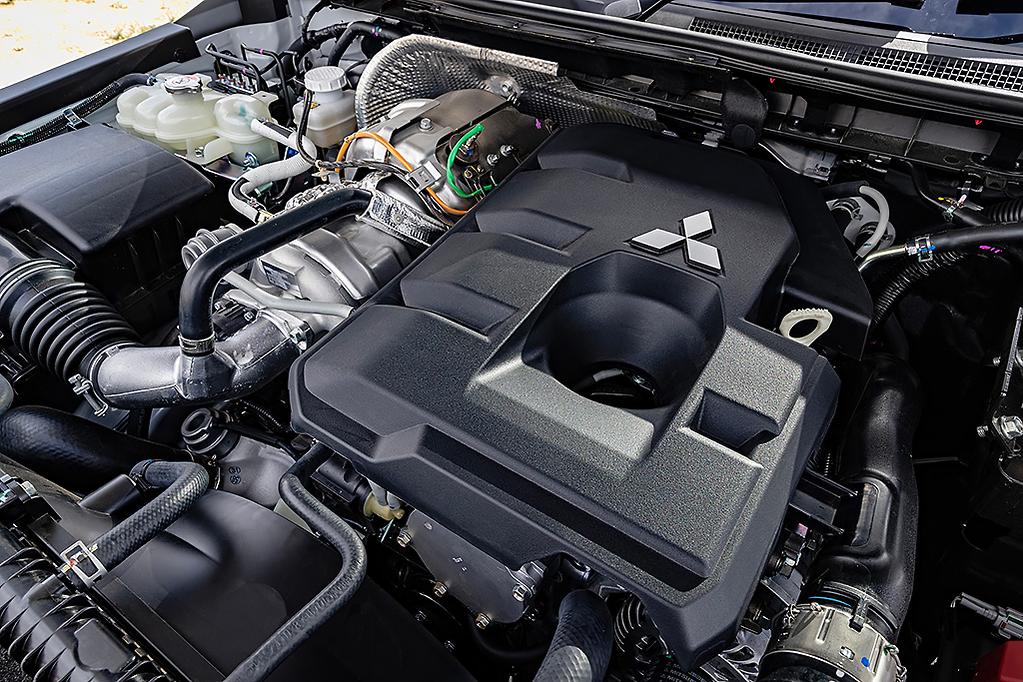
Mitsubishi’s local leadership says there’s no hurry to roll out a hybrid Triton, despite several competitors now flaunting their own electrified utes. With signs that hybrid ute uptake may be losing momentum, could Mitsubishi’s cautious stance prove to be the smarter move?
Though once an early advocate for electrified light commercial vehicles, Mitsubishi says it’s content to hang back and let rivals go first with hybrid utes. Why? Because it believes the market isn’t ready.
Mitsubishi Australia’s product strategy manager Bruce Hampel confirmed there was still interest in a hybrid Triton, telling carsales hybrid utes “will play a part.”
“We’re already seeing some of the other OEMs [Original Equipment Manufacturers] taking those first steps into electrification, into pickups, but we’re not really seeing that pull from the market for the desirability of those types of products in the mainstream at this stage,” he said.
“I think we will be obliged to follow suit at some time in the future, I guess the question is when.”
For now, Hampel said the current diesel-powered Triton serves its customers well.
“There are a lot of users out there from our large fleets that are still very heavily reliant on diesel engines to access worksites and to cover the large distances they need outside of metro usage for your typical trade applications,” he said.
Mitsubishi first flagged plans for a plug-in hybrid (PHEV) Triton five years ago, and has since hinted that it’s open to adding a battery-electric (BEV) variant to the planned PHEV as well
Mitsubishi has since been overtaken in the electrified ute race by rivals like BYD with its Shark 6 PHEV, Ford with the Ranger PHEV, and GWM’s Cannon Alpha PHEV – though demand for these petrol-electric options appears to be fading.
The Shark 6 was a sell-out success at launch and is now neck-and-neck with the Triton in year-to-date sales, though monthly figures have tapered down to just over 1000 units – around 300 less than the Triton in September.
Meanwhile, both the GWM Cannon Alpha PHEV and Ford Ranger PHEV have recorded significantly lower sales than BYD.
Ford’s long game is evident in the Ranger’s evolution. The Wildtrak’s launch in 2009 marked the shift from workhorse to lifestyle ute.
That year, Ford sold 8316 Ranger 4x4s and 5699 4x2s, while Toyota moved 23,097 HiLux 4x4s and 15,350 4x2s.
Since then, Ranger has grown into a standalone brand with models ranging from the XL 4×2 to the Raptor.
In 2023, Ford sold 63,356 Rangers – ending HiLux’s seven-year reign at the top.
While van sales won’t match ute volumes, Henderson sees enough upside to chase HiAce.
“I think it … reinforces our focus on playing where we can win in areas of strength for us,” he said. “We don’t plan anything just to be there, we play there to do well and to deliver great results and we expect to do the same in vans, and we’ll build that over time.”

“There’ll be a balance between the need for ICE [Internal Combustion Engine] and electrified versions of pickups in the future,” said Hampel.
“What that mix is, I guess, is going to be interesting to see how it evolves over the coming years.
“We’re lucky that we’ve got some early leaders from our competition to judge and inform us on how well they succeed, but our feeling is that we will need to increase our offering of electrification outside of [pickups] to allow us to have the necessary [New Vehicle Efficiency Standard] offsets to continue to offer those [pickup] variants to our customers.”
This article originally appeared on carsales.com.au
Share this article:
Disclaimer:
The information presented in this article is true and correct at the time of publishing. business.carsales.com.au does not warrant or represent that the information is free from errors or omissions. The content is provided for informational purposes only and should not be construed as professional advice. For more details on our editorial standards and ethical guidelines, please visit our Editorial Guide Lines.