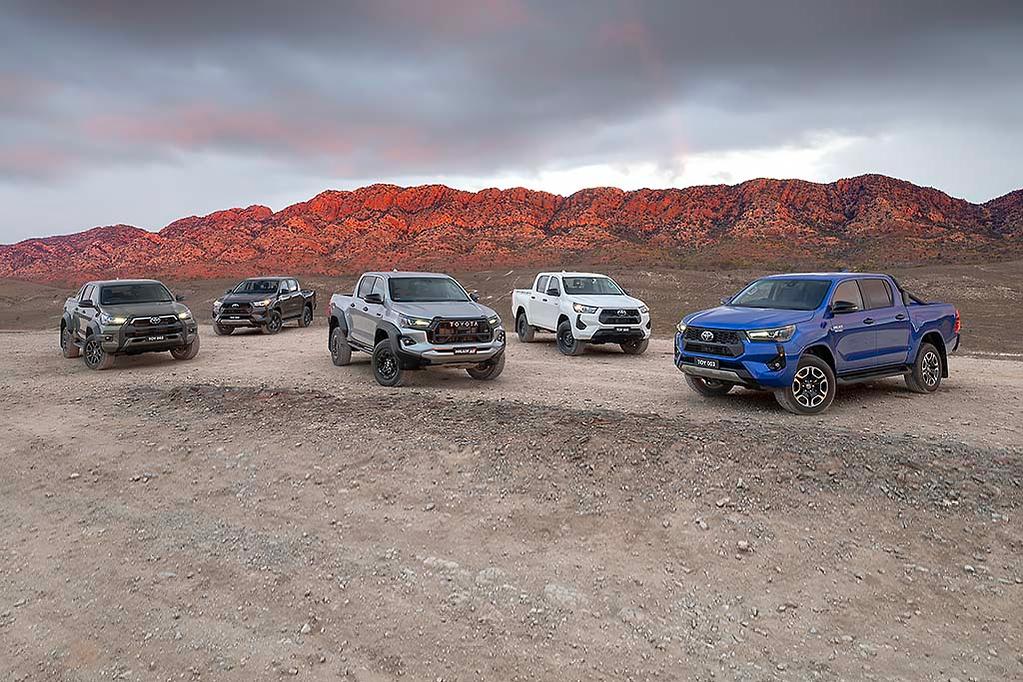
VFACTS October: Hybrids hustle as Toyota HiLux reigns (just)

News
6 min read
Share this article:
News
10 min read

Toyota HiLux, Ford Ranger and Toyota RAV4 covered by just 43 sales at the top of the table

At a glance

Plugless and plug-in hybrids have continued their surge in popularity, accounting for a combined 22.5 per cent of all FCAI-affiliated new-vehicle sales last month as the Toyota HiLux, Ford Ranger and Toyota RAV4 slugged it out for top spot.

Key takeaways

  • 99,588 new sales in October (excluding Tesla, Polestar)
  • More than a fifth of them were hybrids or plug-in hybrids
  • HiLux narrowly held onto top spot ahead of Ranger & RAV4
  • October sales up 1.2%, overall market down just 1.1% YTD.
 

The Finer Details 

After an especially strong September, the Australian new-car market stabilised somewhat last month to be up just 1.2 per cent on October 2024, but it was the rampant hybrid and plug-in hybrid (PHEV) sales growth that’s raised eyebrows.

Month-on-month, hybrid sales were up more than 25 per cent in October (totalling 17,751) while PHEV sales surged 95 per cent (to 4724), though that’s nothing compared to the latter’s 137.5 per cent year-on-year growth – hybrids are up 12 per cent so far this year ending October.

Some 161,426 hybrids have been sold this year with two months of trading left – thanks massively to the Toyota RAV4’s unwavering popularity – while 42,797 PHEVs have landed on local driveways.

Toyota HiLux line-up

The mighty RAV finished October in third place (again) with 4401 sales; just a single unit off the Ford Ranger in second place (4402), which in turn was only 42 units off the best-selling Toyota HiLux (4444).

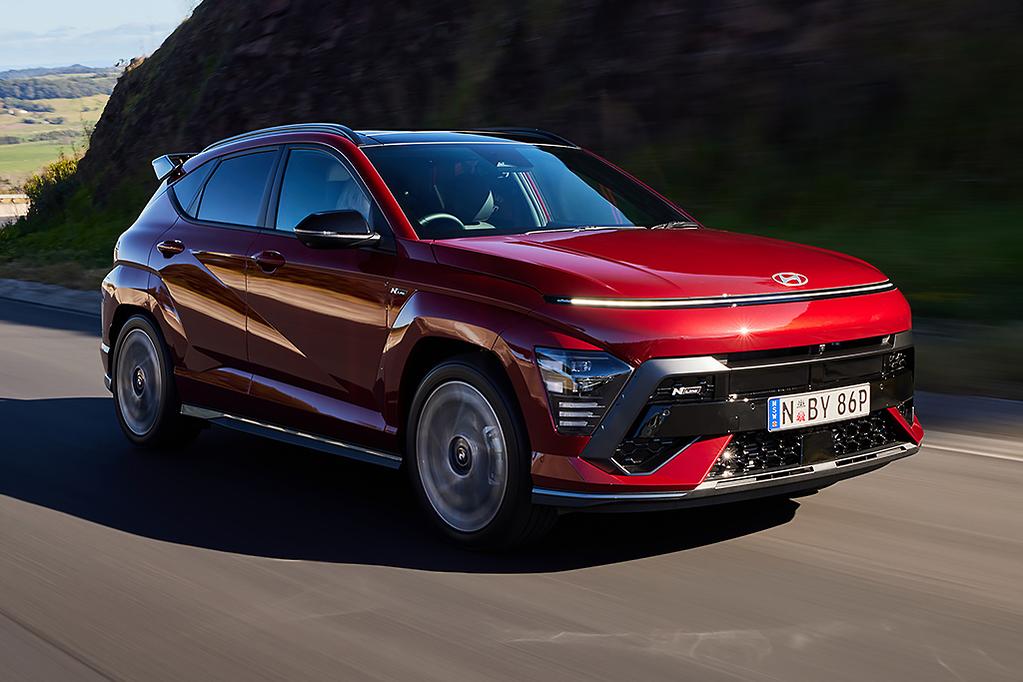
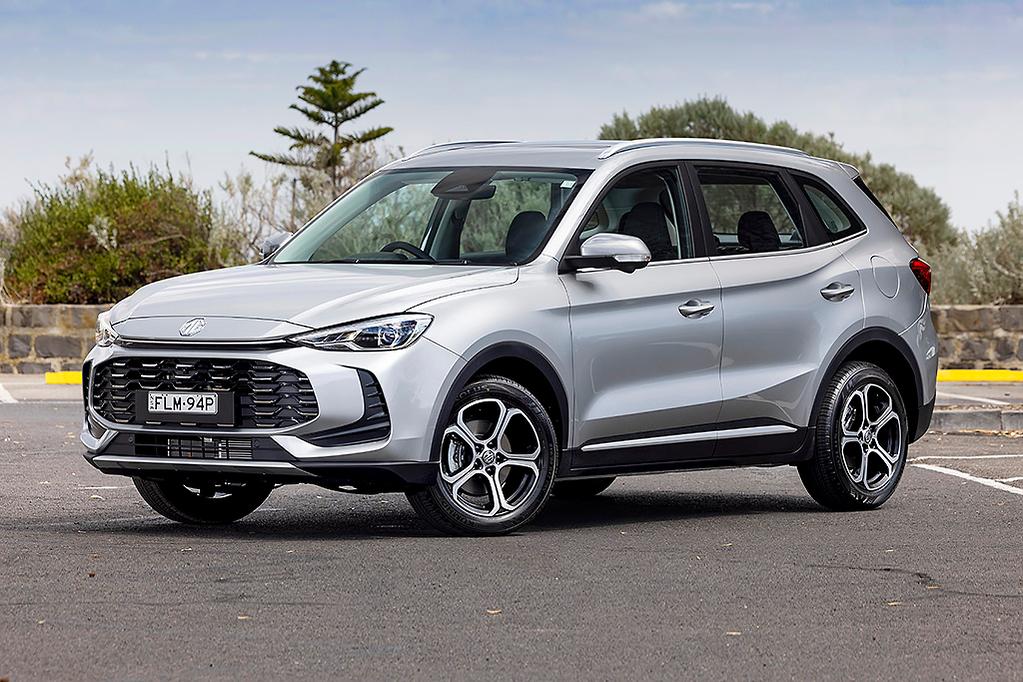
Rounding out the top five were the Ford Everest (2435) and Hyundai Kona (2057), behind which came the Chery Tiggo 4 (1975), Isuzu D-MAX (1896), Mazda CX-5 (1813), Mitsubishi Triton (1770) and MG ZS (1743).

Trendspotters will likely note not one passenger vehicle made it into the top 10 last month, a stark reminder of the plummeting demand (-21.1% MoM, -23.8% YtD) for traditional hatches, sedans, wagons and coupes – neither the Toyota Corolla nor the Hyundai i30 was anywhere near the top 10.

Hyudai Kona Premium N Line

Where are all these buyers going? SUVs.

High-riding family cars accounted for 61.7 per cent of all sales last month, with medium SUVs like the RAV4, CX-5 and Hyundai Tucson proving the most popular… even without counting the rampant Tesla Model Y.

For comparison’s sake, passenger vehicles made up just over 12 per cent of sales

The Road Ahead

With an ever-increasing array of new makes and models coming to market, especially in the electrified sectors, the overall market is now just 1.1 per cent where it was this time last year.

Hybrids and PHEVs are expected to continue increasing in popularity, passenger vehicles will almost certainly keep tailing off as they’re replaced by SUVs of all sizes and shapes.

Keep an eye on our news section for a similar breakdown of October’s EV sales in the coming days.

Best-selling models of October 2025

  1. Toyota HiLux – 4444
  2. Ford Ranger – 4402
  3. Toyota RAV4 – 4401
  4. Ford Everest – 2435
  5. Hyundai Kona – 2057
  6. Chery Tiggo 4 – 1975
  7. Isuzu D-MAX – 1896
  8. Mazda CX-5 – 1813
  9. Mitsubishi Triton – 1770
  10. MG ZS – 1743


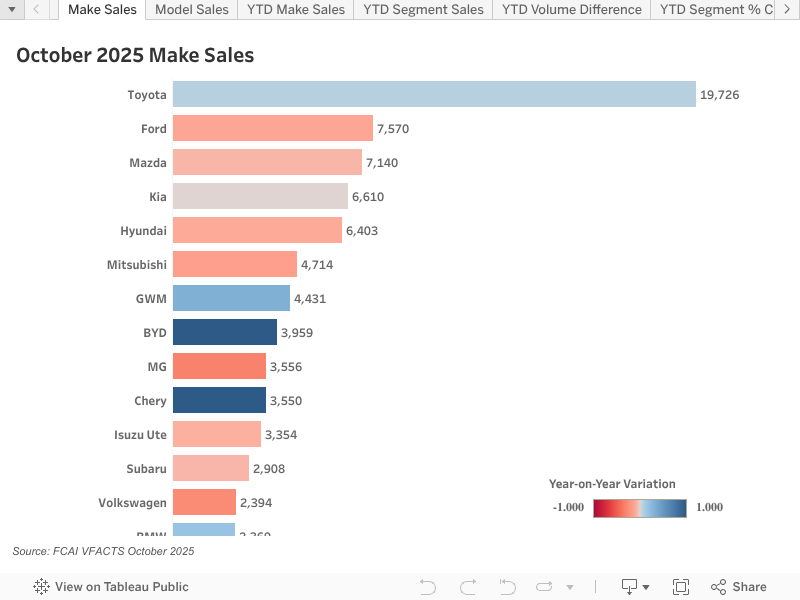
Best-selling brands of September 2025

  1. Toyota – 19,726
  2. Ford – 7570
  3. Mazda – 7140
  4. Kia – 6610
  5. Hyundai – 6403
  6. Mitsubishi – 4714
  7. GWM – 4431
  8. BYD – 3959
  9. MG – 3556
  10. Chery – 3550

* Data sourced from VFACTS
A modified version of this article originally appeared on carsales.com.au

Share this article:

LinkedIn logo

carsales for Business

Disclaimer:
The information presented in this article is true and correct at the time of publishing. business.carsales.com.au does not warrant or represent that the information is free from errors or omissions. The content is provided for informational purposes only and should not be construed as professional advice. For more details on our editorial standards and ethical guidelines, please visit our Editorial Guide Lines.