Home / Where margin is won (and lost)
Where margin is won (and lost)
News
4 min read
Share this article:
News
4 min read
By the time a car needs a heavy discount to move, the decision that cost you the gross usually happened weeks earlier.
Margin takes shape the moment you acquire a vehicle, and it keeps moving as market conditions, competing stock and buyer demand change.
The final negotiation locks in the result, but the margin has largely been shaped by the decisions made before it.
At acquisition, the question is straightforward. What is this car worth in today’s market, and is there demand for it right now?
Answering it means pulling together information that usually sits apart, across marketplaces, auction channels, valuation tools and your own systems.
Get that market context faster and you can weigh up an opportunity while there is still time to act on it.
Sourcing well isn’t necessarily set and forget though. Afterall, a vehicle doesn’t enter a static market. Competing stock changes. Buyer interest shifts. A price that was right on day one can be out of step several weeks later.
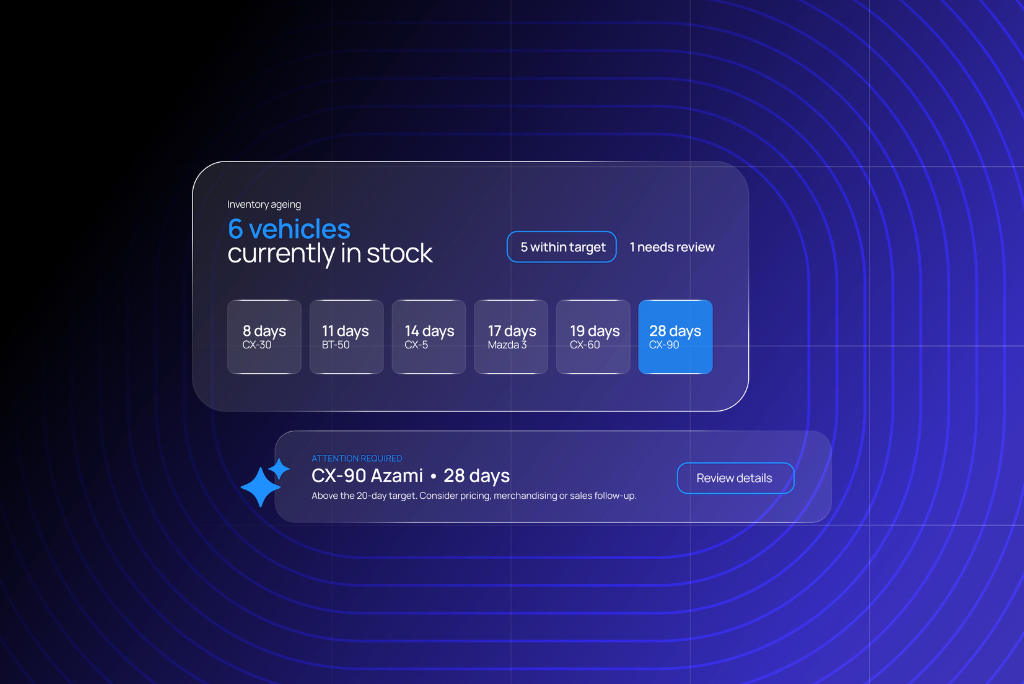
Spotting those movements earlier gives dealers more room to move, whether that means reviewing price, adjusting promotion or turning attention to stock that is starting to age.
That makes stock turn just as important as gross on any one vehicle. Holding out for a higher gross can work against the dealership if the car occupies valuable space for longer while its market position continues to change.
The goal is not simply to maximise the result on one sale. It is to make the right pricing and inventory decisions often enough to keep stock moving and create room for the next opportunity.
Dealers using carsales inventory insights moved stock around five days faster on average over the 12 months to November 2025, roughly 10% quicker.¹
Faster turn creates more opportunities to sell across the yard. It also gives dealers more room to respond before ageing stock requires a much larger price correction.
Reading those moments early depends on knowing where buyer interest is heading, and buyers show that long before they walk into a dealership.
Car buyers spend around six months choosing their next vehicle, and more than 60% pause, backtrack or rethink a decision somewhere along the way.² ³Through all of that, buyers are searching, comparing and building shortlists across a range of sources.⁴
For sales managers, that makes preparation important. Understanding how the car is positioned, what buyer interest looks like and what an acceptable deal should be helps the team make a timely decision when a serious buyer appears.
It is not simply about generating more enquiries. It is about making more of each genuine opportunity, with enough context to move the conversation forward and keep the car moving.
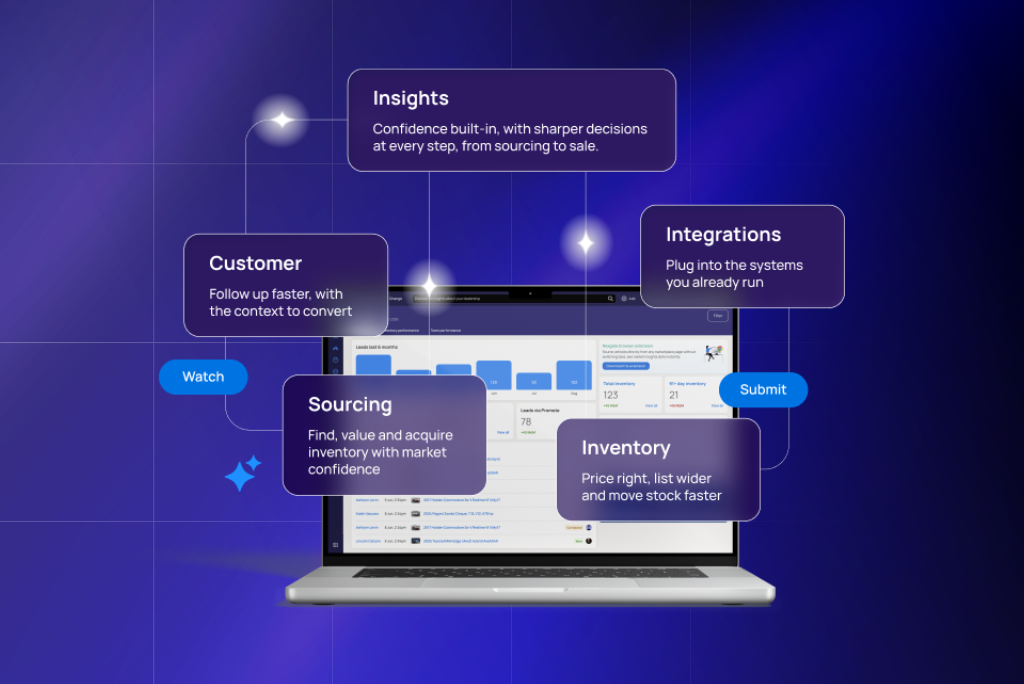
Nexgate brings that carsales market intelligence into the workflows dealers already use across sourcing, inventory and customers.
In practice, that means checking market context before you buy, seeing how your stock sits against comparable cars, spotting inventory that needs attention and carrying more buyer context into customer conversations.
The aim is not more data. Rather, it is making the right information easy to use at the moment a decision gets made.
Margin is not a fixed amount attached to each car. It is shaped by a series of decisions: buying the right stock, setting the right price, responding as the market changes and making the most of each genuine buyer opportunity.
Made consistently across the yard, those decisions help sell more of the right cars, improve stock turn and reduce the time vehicles spend waiting for a buyer. Small gains at each stage can compound into a stronger overall result.
See changes in the market earlier and you have more ways to respond before they turn into margin problems.
Nexgate brings sourcing, inventory, customer activity and market intelligence together in one connected platform, so dealers can see what needs attention and act on it sooner.
Explore Nexgate to see what is now available to your dealership.
Sources
1.carsales internal data, Inventory Insights usage, December 2024 to November 2025.
2.Australia’s Car Buyer Report 2026, conducted by Nature. n=2,008. Fieldwork conducted September to October 2025. Q. Thinking about each stage of the journey so far, how much time, approximately, haveyou spent at each stage.
3.Australia’s Car Buyer Report 2026, conducted by Nature. n=2,008. Fieldwork conducted September to October 2025. Q. At any point during your vehicle purchase process did you stop or pause? Did you go backwards, startoveror re-evaluate your decision.
4.Australia’s Car Buyer Report 2026, conducted by Nature. n=2,008. Fieldwork conducted September to October 2025. Q. Thinking about each stage of the journey so far, how many individual sources did you use at each stage.
Share this article:
Disclaimer:
The information presented in this article is true and correct at the time of publishing. business.carsales.com.au does not warrant or represent that the information is free from errors or omissions. The content is provided for informational purposes only and should not be construed as professional advice. For more details on our editorial standards and ethical guidelines, please visit our Editorial Guide Lines.