Electric Vehicle Council takes aim at “toxic” federal policies as EV supplies show no sign of improving
Australian public interest in electric vehicles has never been greater, but for customers anxious to swap their conventional internal-combustion vehicles for EVs, there is nothing to suggest that wait times will decrease even in the long-term.
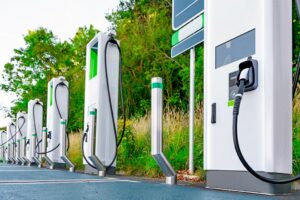
Sales of electric vehicles tripled in 2021, when more than 20,000 plug-in vehicles were sold locally, including both battery-electric (EV) and plug-in hybrid (PHEV) vehicles, led by the Tesla Model 3 with 12,094 registrations.
That momentum, however, has been halted in its tracks in 2022 by what the Electric Vehicle Council (EVC) calls “a toxic combination” of outdated fuel economy policy at a federal government level.
As companies like Kia, Hyundai, Polestar, Volkswagen and many others add more EV products to their model lines in overseas markets, Australia’s refusal to implement globally recognised fuel efficiency standards means those companies will prioritise sales of EVs in territories where disobeying those standards leads to large fines.
“Car-makers look at Australia and see strong demand, which is encouraging,” said EVC chief Behyad Jafari in a statement.
“But they also realise that every time they sell an EV in America or Europe that will count toward meeting the fuel efficiency standards of those jurisdictions. So naturally they prefer to sell EVs there, instead of here.
“Through a toxic combination of inertia, myopia, and dogma the Morrison government has created a situation where thousands of Australians can’t get access to the car they want to buy.”
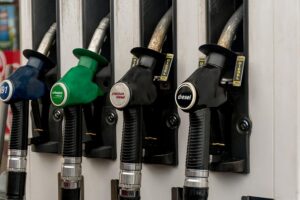
With fuel prices bursting through the $2/litre barrier thanks to record-high crude oil costs, searches on carsales for new energy vehicles have reached unprecedented levels, with one in five searches directed towards EV or PHEV products.
But – as evidenced by Hyundai selling an additional allotment of IONIQ 5s online in less than seven minutes this week – supply correction is a pipe dream for Australian consumers at present.
This is despite the fact that the country’s three most populous states – Queensland, NSW and Victoria – now offer up to $3000 towards the purchase of a new EV.
“All over the world governments are recognising that most consumers want an electric option when they consider their next vehicle and they’re doing what they can to make that option viable,” said Jafari. “Australia remains a real outlier.”
There are 37 EV variants available in the Australian market at present, along with 37 PHEV variants. Wait times for recently launched models like the Kia EV6 stretch out to 2024, while brands like Volkswagen are still maintaining a ‘hold’ strategy when it comes to implementing an EV model roll-out plan.
Volkswagen Group Australia managing director Paul Sansom recently called upon the federal government to develop binding CO2 emissions standards that all states can adopt, during a speech at the TRANSFORM 22 summit in Sydney.
“VGA has said with reason that this otherwise enviable country of ours has lagged behind the rest of the first world in creating the conditions for zero-emissions mobility,” he said.