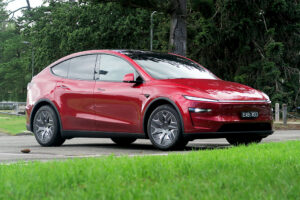
OPINION: Nissan had the perfect head start, Toyota hides behind mild hybrid and Mazda’s big plans are barely kicking off, so what’s the issue with electric cars?
If you want to get a rise out of a senior Toyota official, ask them about the auto giant’s electrification plans. A word of advice… stand back a bit.
There will be considerable pushback around issues of carbon dioxide reduction, customer needs and the like, ending with the assertion that it is in the game already.
Its long-time local rival, Mazda, is in a similar spot, with very little skin in the EV game aside from a compliance-special SUV that’s too expensive and doesn’t travel far enough.

It’s just announced an ambitious $20 billion plan to catch up on the EV side, but in car industry terms, it is deep into the third quarter with this stuff.
That money needs to come from somewhere, too, and in Mazda’s case, it will need to come from the sale of internal combustion cars.
These cars, of course, are still in the throes of production hell thanks to the rebooting of the world’s economy, becoming more expensive by the day and staring down (at times misguided) government-instigated sales bans within this decade.

Nissan… where do you even start with Nissan? It launched its first global electric vehicle, the Leaf, back in 2010. Even given my rubbish maths, that’s more than a decade of experience in the space… so where’s the Qashqai EV, or the X-Trail EV?
Instead, it’s persisting with a clever yet complex ICE hybrid powertrain that is so hard to explain that it will likely wither and die on the vine of commercial and marketing reality.
As well, Nissan was handed the perfect launching pad for a wider EV rollout when it partnered with the electric-savvy Renault in the 2010s, but a decade of internal obfuscation has put paid to any competitive advantage it may have garnered.
It’s not just about BEV
So why are some of the world’s biggest car companies so dead set against the roll-out of an electrification fleet?
In some ways, it’s a reluctance rooted in reality; the electric vehicle is not, despite the propaganda campaign to the contrary, the last word in mobility, particularly in larger territories and under-developed markets.
But the answer, as it almost always does in the global automotive industry, lies in the economics of car building – and Japan’s most powerful car company, Toyota, simply doesn’t see an economic advantage in moving away from hybrids.
At least, not yet.
Toyota’s position – and by dint, the position of the wider Japanese industry – is that switching to EVs will do little to improve the environment if the factories that produce them and the material they are produced from are made via electricity created from fossil fuels.
This stand, of course, has been compounded domestically after the closure of Japan’s nuclear energy network in the wake of the 2011 Fukushima disaster, resulting in a backslide to fossil fuel reliance.
CO2 pushback
Toyota will continue to champion the hybrid for as long as it’s able, pointing to the millions of tonnes of CO2 that the technology has already kept out of the atmosphere… not to mention the fact that its hybrid tech development costs have long been amortised, which makes each car much more profitable.

Japanese car companies are also joining the groundswell of polite protest from other carmakers around the globe, who are collectively suggesting to their relevant governments that enforcing a switch to electric vehicles by a fixed future date is simplistic at best and impossible to achieve at worst.
And there is merit to that argument; while a short- to medium-range EV might be terrific for the citified residents of Seoul, San Francisco or Sydney, it certainly won’t suit suburban and rural folks, nor will it translate well to commercial applications like goods transportation.
Fewer parts, fewer jobs
Peel away the greenwashing, though; the real answer is far simpler.
A modern hybrid may emit less greenhouse gas, but at its heart, it’s still an internal combustion engine vehicle – and that vehicle is built with many more components than a modern EV.
And those components are part of a complex ecosystem of Japanese manufacturers and suppliers that will not be able to withstand the seismic reshuffle that will ensue when internal combustion powerplants are no longer part of the picture.
Companies will close, and potentially millions of workers will be displaced.
A modern automotive company could turn to electrification in a hot second if (and here is the rub) it so desired.
Compared to an internal combustion engine-equipped vehicle, a battery-electric vehicle is vastly easier to build at scale, with far simpler platforms and powertrains, two-thirds fewer components and much-reduced reliance on external suppliers.
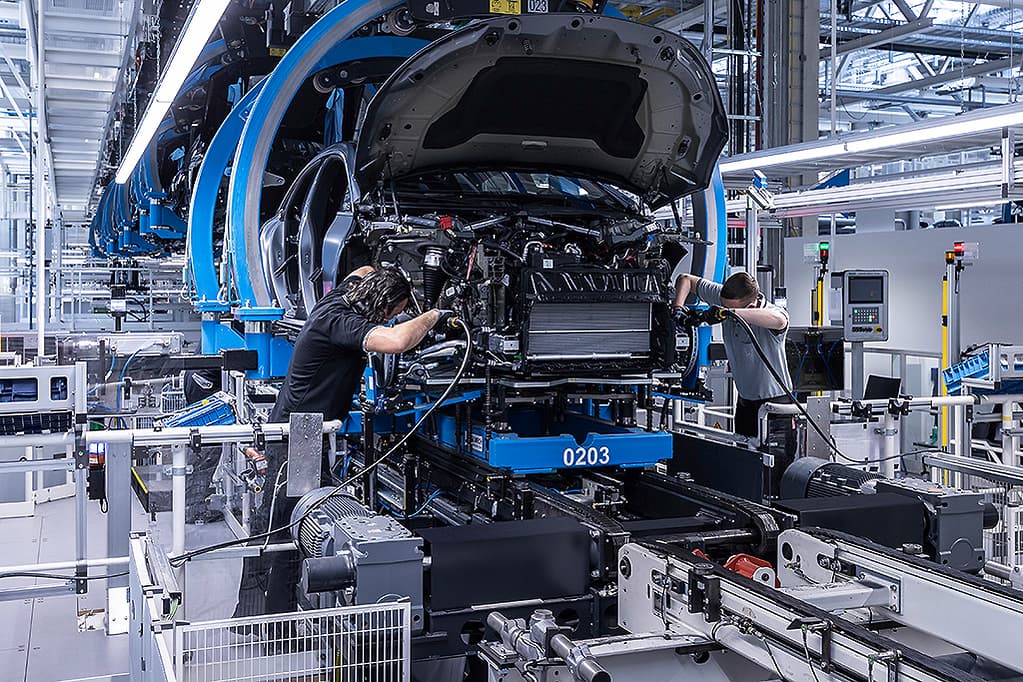
And these suppliers – think Denso, which did $50 billion in business in 2021, or Aisin which logged $32 billion – have a vested interest in the status quo of vehicles that have 12-13,000 components, not 4000.
The game starts now
It’s fair to say that the wider Japanese automotive industry has been caught by surprise at the stratospheric increase in interest – at both consumer and government level – in electrification.
And while the wheels are starting to whir, the Americans and the Germans are well ahead of the curve.
Japanese carmakers have a history of innovation that has contributed hugely to the fabric of the modern automotive space, and should they choose, they can do so again.
Had they been on board 20 years ago, though, imagine the cars we could all have today.
[author] [author_image timthumb=’on’]https://editorial.csnstatic.com/editors/tim-robson-author.jpg[/author_image] [author_info]Tim Robson[/author_info] [/author]