With a history of vehicle production and an abundance of resources, could electric cars fire up production lines again in Australia?
Supply and demand… it’s as simple as economics gets. Currently, the demand for electric vehicles far outstrips supply, and is likely to do so for some time, thanks to ever-increasing requirements for manufacturers to turn off combustion-engine production lines in favour of EVs.
So the answer, then, is more supply. Could that supply potentially rumble down a production line in Australia?
Well, it depends upon who you ask.
According to a recent study from the Australia Institute, the answer is a resounding yes.
The institute points to the transformative nature of the electric vehicle movement and posits that Australia has a head start when it comes to the crucial requirements, including natural resources, an advanced industrial base, a highly skilled workforce and a consumer base willing to buy EVs.
“Australia can choose to pursue a renewed industrial future via an EV industry and its environmentally and socially transformative potential,” the report reads.
“This would both address our climate change responsibilities and revive our strong industrial history, by making us a leading renewable energy and industrial innovator. An EV industry supported by government will create the context for a revival of domestic EV manufacturing in Australia far beyond automotive manufacturing.
“Australia can build a strong EV manufacturing industry with the right policy settings and government actions.”
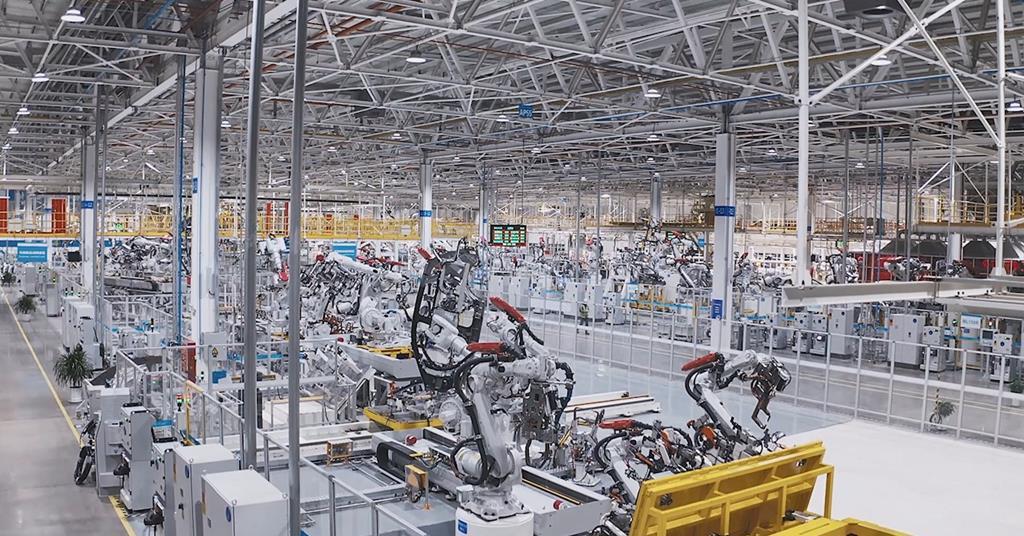
The lead author of the report, Dr Mark Dean, told The Guardian Australia that a new EV industry may not be a “panacea” to Australia’s lack of ambition on climate change, but building a new, hi-tech industry from the ground up would make the transition easier by spreading the benefits.
“For decades the auto industry was the glue that held communities together. It provided security and good standards of living,” Dr Dean said.
“What you’ll be doing is saying to all these different people in all these different communities that by creating an electric vehicle industry-driven future, you will benefit.
“We need people to mine these commodities, process them, and we need them to be transported so they can be manufactured – everyone along the way benefits.”
What the report does not address, though, is the economies of scale required to facilitate successful, long-term automobile production.
While the failure of local manufacturing can be attributed to a variety of causes, underlying them all was a paucity of production; it simply become uneconomic to build so few cars for such a small market.
Holden’s sporadic export program, coupled with Toyota’s offshore aspirations, shored the industry up for a time, but eventually, economics caught up with the game.
“I was always of the opinion that Australia is a good place to develop and build cars,” says Bosch Australia chairman and president of Bosch Australia and industry stalwart Gavin Smith during a wide-ranging interview with carsales Insights.
“That hasn’t changed. If we go back in time, we were doing a lot of good engineering.
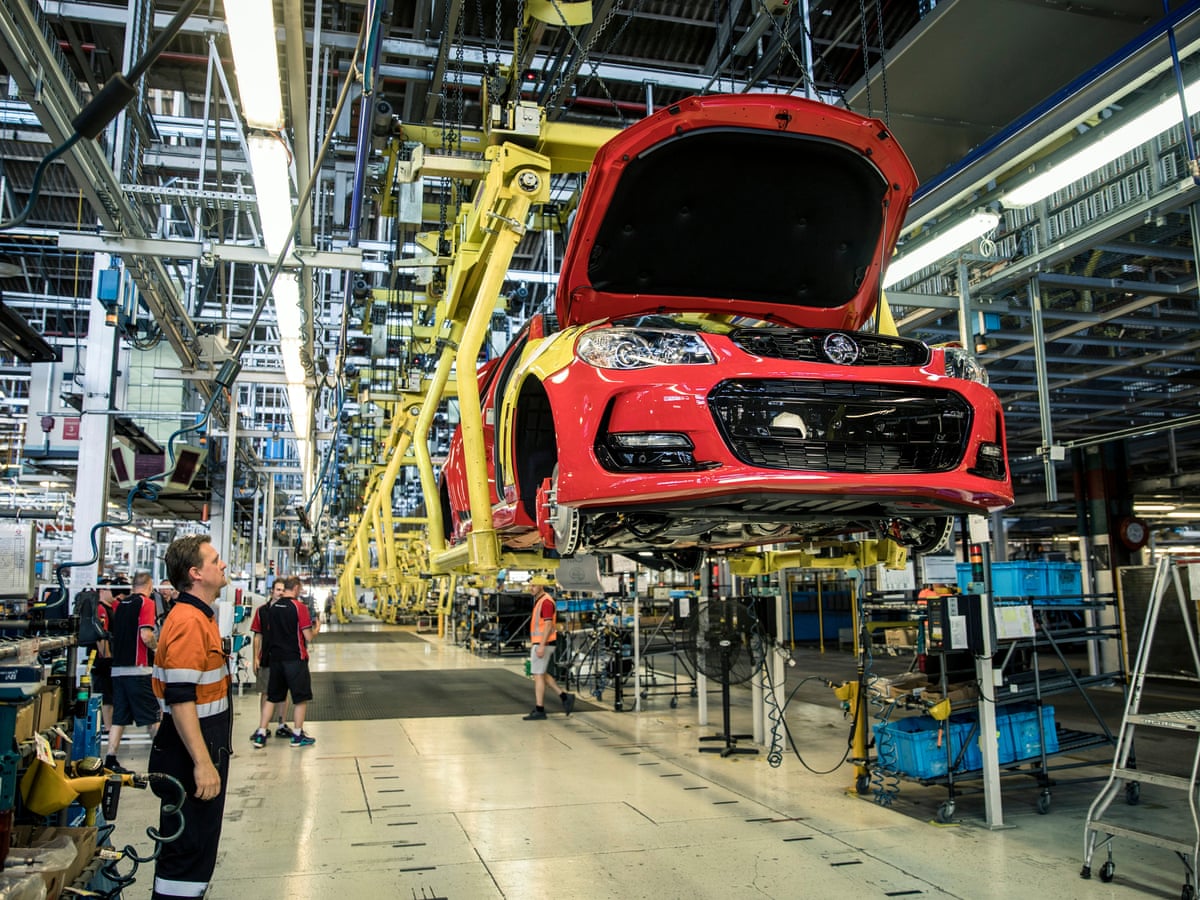
“But to be honest, the vehicle manufacturers that we had in Australia were driven by international politics. What was decided in Detroit, what was decided in Japan, what was decided elsewhere was then relayed to the local businesses and they could only do what they were told in the end.
“If we had an indigenous vehicle manufacturing business that was making decisions in Australia about a business that was growing from Australia. And it allowed us in that regard to producing for international markets as well as domestic markets. Then yes, I think there is a place.”
Mr Smith pointed to Australia’s best-selling vehicle, the Toyota HiLux, as an example of the argument that production volumes are crucial to the success or failure of vehicle manufacturing.
“When the largest volume vehicle [in Australia] is selling in tens of thousands of units a year, then it’s very hard to find a competitive angle for local production,” he explained.
MORE
Fewer chips that do more: Bosch’s big bet on chip bounce-back
“So you need to get scale. If you don’t have scale, if you don’t have automation, then you need to be producing a very, very specific niche product that you can sell at a high price to make it worthwhile.
“It needs to be one or the other; we need to be in niches with high prices, or we need to be in mass with access to access to international markets.”
Mr Smith pointed to the production of a low-volume, high-value sports car with a famous name on the nose as an example of niche production done well.
“If you take a look at what Brabham [is] doing, you could argue that if it’s the right product at the right price for the right customers, you know, building them in handfuls can make sense,” he said.

“But again, it comes back to ‘why Australia’? So there needs to be something that we can do better. We can satisfy and allows us to go to a broader market and be competitive.
“We’ve got a fantastic resources sector. We’ve got a fantastic agriculture sector. We’ve got a land mass, which is by comparison to any other country in the world bar, a handful, with a population widely distributed from east to west, which is very difficult to service.
“So there will be opportunities I’m sure, but not many people are finding them easy to either access or navigate or make money from.”
[author] [author_image timthumb=’on’]https://editorial.csnstatic.com/editors/tim-robson-author.jpg[/author_image] [author_info]Tim Robson[/author_info] [/author]