The new year has brought with it old news – the Australian automotive market remains in serious decline.
And if the market continues to underperform as it is, new vehicle sales will fall to their lowest level since 2009.
VFACTS figures reveal that sales last month were 12.5 per cent lower than sales in January of 2019, which was the worst January result since 2012. Last month has limboed below even that result, with a tally of 71,731 vehicles sold, a total that is lower than any previous January result since 2009.
If sales remain on track for a 12.5 per cent downturn over the course of the full year that will reduce the annual market below one million sales. The last time the market was below one million sales was also 2009.
“Given the broad range of environmental, financial, international and political issues facing Australia during January, it is no surprise to see the new vehicle market has reported a conservative start to the year,” said Tony Weber, chief executive for the FCAI (Federal Chamber of Automotive Industries).
Lending restrictions and a stagnant economy remain hurdles to sales growth, and the bushfire disaster that has been constantly in the news for the past few months has likely had some effect also, but the sorry January result may also be a product of the FCAI’s new, more stringent sales reporting criteria.
“VFACTS is the most accurate source of data for the automotive industry. The updated VFACTS system is working well and automotive brands have welcomed its release,” Weber said.
“The benefits of the new system include improved data accuracy and more timely reporting lines.”
Broken down, the January VFACTS figures indicate that buyers are still deserting passenger cars in droves. While the total market slumped by 10,263 sales for the month, passenger cars accounted for about three quarters of that – a loss of 7556 vehicles. That’s nearly 27 per cent less than January last year.
SUVs stagnated, with a sales figure just 547 (1.5 per cent) fewer than 12 months earlier, and light commercial vehicles went backwards by 1774 sales (11.2 per cent).
Of the top 10 automotive brands, only Kia sold more cars last month than in January 2019, upholding its remarkable record. That brand anticipates expanding its sales volume by a few per cent this year, thanks to the Seltos SUV and other SUVs in the pipeline.
Every other brand in the top 10 slipped backwards, which may be a reflection of the slippery sales reporting in January last year, as much anything else. Holden, once Australia’s most popular brand, remains in the top 10 by a margin of around 400 sales ahead of Subaru. The GM subsidiary has previously fallen out of the top 10 some months, but following the announcement its imported Commodore large car will not remain on sale, 2020 might be the year Holden becomes one of the lesser players in the market.
It wasn’t all bad news though, with smaller brands outside the top 10 continuing their recent strong performance. Haval grew 443%, Jeep was up +3.2%, Land Rover grew +35.2% thanks to evoque and Discovery Sport, Lexus achived growth of +2.6%, MG was up a massive +82.7% thanks to its HS and MG3 models, Porsche grew +121.6% off the back of demand for Macan SUV and 911, RAM grew +41.3%, Skoda was up +32.4% and Volvo up +28.3% thanks to its acclaimed XC60.
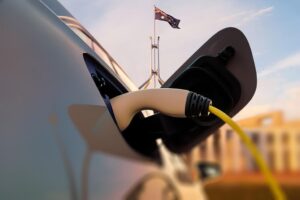
And American Tesla EV upstart continues to make a splash. New figures reveal Tesla sold more vehicles in Australia last year than it did during the previous seven, as the popularity of the bourgeoning electric car-maker soars due to the small and cheaper Model 3 sedan.
Internal sales numbers obtained by carsales.com.au show Tesla sold 3793 vehicles in 2019, boosting its overall sales to 7071 since officially launching with the Roadster in 2012.
Despite a general lack of demand for EVs Down Under, Tesla’s Australian sales last year eclipsed established car-makers including Jaguar (2274 sales), MINI (3204 sales) and Peugeot (2445 sales).
Tesla does not disclose its sales figures in Australia under the conventional VFACTS reporting system, but its internal numbers reveal the US brand commands a 56 per cent share of the combined EV and plug-in hybrid electric vehicle (PHEV) market Down Under.
Top 10 brands for January 2020
Toyota – 14,809
Mazda – 6695
Hyundai – 5443
Mitsubishi – 5108
Kia – 4705
Ford – 4169
Nissan – 3444
Honda – 3436
Volkswagen – 3246
Holden – 2641
Top 10 cars for January 2020
Toyota Hilux – 2968
Ford Ranger – 2624
Toyota Corolla – 2370
Toyota RAV4 – 2290
Mitsubishi Triton – 2075
Hyundai i30 – 2038
Mazda CX-5 – 1859
Kia Cerato – 1500
Toyota LandCruiser – 2101
Nissan X-TRAIL – 1467
Mazda3 – 1330
Around the country
ACT 1,116 -14.0% YoY
NSW 23,391 -12.2% YoY
NT 511 -24.7% YoY
QLD 14,085 -13.0% YoY
SA 4,517 -10.5% YoY
TAS 1,193 -9.1% YoY
VIC 20,338 -14.7% YoY
WA 6,580 -5.6% YoY