ANCAP to overhaul “irritating, complicated” safety systems"

News
4 min read
Share this article:
News
10 min read

Independent safety body’s new 2026 protocols will focus on four key pillars with increased on-road testing

At a glance

Consumer feedback is said to be at the forefront of the Australasian New Car Assessment Program’s (ANCAP) latest safety rating overhaul, with new measures and stricter testing to come into effect from 2026, when the independent safety body will penalise “irritating” driver assistance systems and test the operation of vehicle components such as electric door handles post-crash, among other things. It’s also calling on vehicle manufacturers to ditch “distracting” touchscreens and “bring back buttons”.

The key takeaways

  • ANCAP to introduce four new pillars: Safe Driving, Crash Avoidance, Crash Protection, and Post Crash
  • More on-road testing for “irritating” ADAS
  • eCall availability and performance to be scrutinised
  • Flush and electric door handle operation added to post-crash checks
  • The safety body says it’s asking OEMS to “bring back buttons”
 

The full picture

The local independent safety body updates the protocols for its new car assessment program every three years, and its latest “new-gen approach” is heavily based on consumer and industry feedback about annoying driver-assist systems such as driver attention monitoring and speed sign recognition.

Four new “Stages of Safety” – said to be based on the Haddon Injury Prevention Matrix – will include much of what ANCAP already tested, such as a vehicle’s physical performance in several crash scenarios – albeit with a few changes including crash dummy size, etc. – along with its impact on vulnerable road users like pedestrians and cyclists.

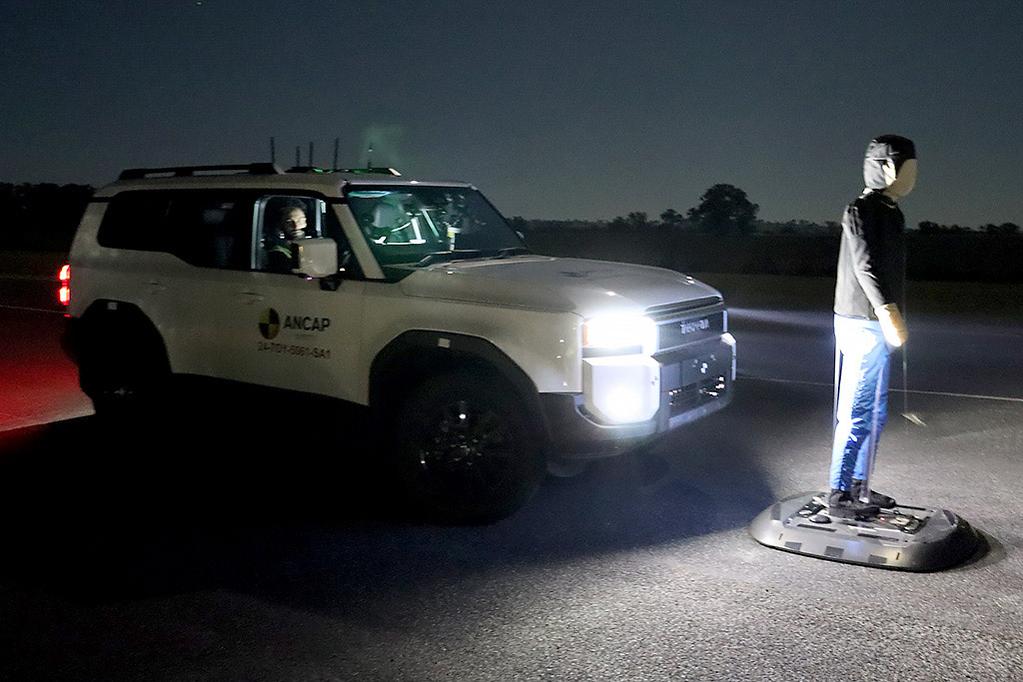
But a renewed focus on driver assistance aids will see ANCAP conduct more physical testing (on a test track) to include more detailed scenarios, such as a car’s ability to avoid accidents at night-time or in adverse weather conditions, with vulnerable road users wearing different types of clothing etc.

Ancap Safety Test - Toyota Prado

Driver engagement will be critiqued as part of the Safe Driving pillar, with ANCAP set to assess and reward vehicles for well-designed systems such as driver monitoring. It says that when implemented properly, the system should support the driver rather than irritate them.

Performance of lane-keeping and speed sign recognition systems will see ANCAP conduct more on-road driving assessments to score vehicles on how gently or aggressively the lane-keep assist works, among other factors.

It will also look more closely at cars with distracting and complicated touchscreens, with the firm calling for manufacturers to bring back buttons and stalks for important driver controls like the horn, indicators, hazard lights, windscreen wipers and headlights.

Other targets include pedal misapplication – where a driver unintentionally presses the accelerator instead of the brake – with assessment criteria to consider smart systems that monitor pedal inputs together with information from crash avoidance cameras and sensors in hopes the vehicle will recognise a potential danger and automatically reduce acceleration.

ANCAP Stages of safety

Emergency call (eCall) availability and performance will also be assessed, with ANCAP encouraging manufacturers to make the feature more readily available and offer first responders more detail about each crash.

As carsales exclusively reported in February, ANCAP will also implement post-crash testing of technology such as power-operated and flush door handles.

Finally, following an embarrassing and potentially deadly seat failure during a crash test of an MG3 earlier this year – which controversially resulted in an upgraded four-star safety rating for the Chinese brand’s compact city car – ANCAP has introduced a rule whereby “if the seat or seat rails fail in a crash test, an automatic 50% loss of points per test will apply to the ‘Crash Protection’ score.”

The Road Ahead

The new protocols will come into effect next year and is the result of ANCAP “listening”, according to ANCAP chief executive Carla Hoorweg.

“The Stages of Safety approach will allow ANCAP to incorporate useful feedback, enhance existing tests and incorporate new areas of focus,” Hoorweg said.

“This new approach also provides a structure that can adapt to the technological developments that will shape the automated driving future.

Share this article:

LinkedIn logo

carsales for Business

Disclaimer:
The information presented in this article is true and correct at the time of publishing. business.carsales.com.au does not warrant or represent that the information is free from errors or omissions. The content is provided for informational purposes only and should not be construed as professional advice. For more details on our editorial standards and ethical guidelines, please visit our Editorial Guide Lines.