Australia’s new vehicle market isn’t booming. In fact, year-to-date deliveries are up just 2% to around 849,000 units. On the surface, that sounds like a story of stability.
From a RedBook perspective, however, August 2026 may be remembered as the month Australia’s automotive market fundamentally changed. The headline isn’t volume, it’s mix.
According to VFACTS, including Tesla and Polestar who don’t report, electrified vehicles now account for approximately 44% of all Passenger, SUV and Light Commercial sales. More significantly, August marked the first month where battery electric vehicles outsold traditional petrol-powered passenger and SUV vehicles. Not by replacing overall market demand, but by redirecting it.

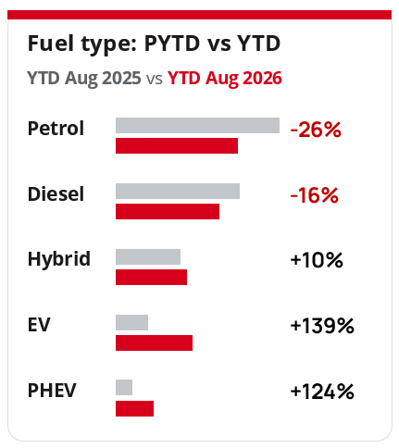
The numbers reveal a wholesale transfer of volume. Compared with the same period last year, EV sales are up 139%, PHEVs have surged 124%, and hybrids continue to grow. Meanwhile, petrol volume has fallen 26% and diesel is down 16%. In a market that is broadly flat, electrified vehicles have effectively absorbed the demand once held by internal combustion engines. The shift is also redefining who wins from a brand perspective.
Brands built around electrification such as BYD and Tesla have more than doubled their volume, while emerging Chinese brands like Chery or Geely continue to accelerate. At the same time, several established market leaders have recorded double-digit declines. This is no longer simply a story about new brands arriving. It’s about a new technology mix reshaping competitive positions across the entire market.
Importantly, consumers haven’t abandoned utility or practicality. SUVs remain the engine room of Australian demand, growing 9% and contributing the overwhelming majority of market gains. What has changed is the powertrain Australians are choosing beneath them.
For RedBook, this moment matters because vehicle values, specification mix, future residual forecasts and replacement cycles are all influenced by these shifts. The market is no longer transitioning toward electrification. It is actively reallocating volume toward it.
But it could become remembered as the month Australia quietly crossed the line from adopting new energy vehicles to embracing them as a mainstream choice.
Share this article:
Disclaimer:
The information presented in this article is true and correct at the time of publishing. business.carsales.com.au does not warrant or represent that the information is free from errors or omissions. The content is provided for informational purposes only and should not be construed as professional advice. For more details on our editorial standards and ethical guidelines, please visit our Editorial Guide Lines.