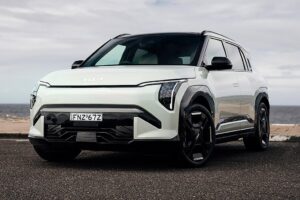
In the face of state government moves to tax electric vehicles, Australia car buyers’ interest continues to build in both EVs and hybrids.
carsales data highlights a significant lift in views and enquiries for hybrid and electric vehicles during 2020.
Between March – October 2020, views for brand new hybrid and electric vehicles increased 29% and 21% on the same period last year.
And the increase in views translated into additional sales opportunities for dealers, with enquiries up 60% and 57% respectively.
The increase in enquiries sent enquiry share for brand new hybrids up 40%, and brand new electric vehicles up 37% over the same period.
“There’s good evidence to show that hybrids are rapidly becoming a mainstream option for car buyers. Toyota’s most recent hybrid models are at last delivering on the fuel efficiency promises in the real world and with modest price premiums, more buyers are taking the plunge,” says Mike Sinclair, Editor in Chief at carsales.
Indeed, Toyota was a key driver in hybrid view growth on carsales. Toyota RAV4 Hybrid was the most-viewed brand new hybrid with views up 147% between March – October, while Corolla hybrid took second position, with views up 30% across the same period.
Views for the recently-updated Mitsubishi Outlander PHEV increased 116% to round out the podium.
Tesla Model 3 was the most-viewed pure electric vehicle, with views up 22%. In second was the new for 2020 Mercedes-Benz EQC, followed by the Jaguar i-PACE which lost view share compared to its rivals.
The Nissan Leaf, one of the most affordable electric vehicles for sale, gained the most ground with views up 128%.
“The number of pure electric vehicles models on sale Down Under will undergo a step change in late 2020 and into 2021,” Sinclair says.
“Most importantly we will start to see more affordable EVs hit dealer showrooms. MG recently launched Australia’s cheapest ever pure EV – and it’s an SUV to boot.”
Increasing interest in hybrid and electric vehicle coincides with new proposals to tax their usage. South Australia Victoria and New South Wales have recently moved to hit electric vehicles with a road user tax.
The proposals from these governments have been met with widespread opposition, including from the Federal Chamber of Automotive Industries (FCAI) – the peak body representing the car-makers.
It’s a different story in Europe
While Australia’s federal and state governments dither on effective electric vehicle strategy, Europe is fast becoming the epicentre for electric vehicle adoption.
Government incentives for consumers and infrastructure investment, in addition to the threat of big EU fines for automakers that fail to meet carbon-emissions targets, are fueling adoption in mainland Europe and the UK.
So far, the Australian federal government has steered clear of following Britain and EU countries in setting targets to phase out combustion-engine vehicles.
And while pure electric vehicles make up a miniscule amount of US passenger car sales, the election win of Joe Biden is expected to see new investment in the country’s charging capabilities and stricter emissions regulations that will favour their adoption.
Sales of electrified vehicles as a whole in Europe are soaring. Of October 2020’s total 1,127,624 registrations, 26.8% featured some sort of electrified powertrain, up from just 7% in October 2019.
The Golf-sized Volkswagen ID.3 hatch is now Europe’s best-selling electric vehicle, with the German car-maker selling 10,475 units in October.
In second place, was the Renault Zoe, selling 9778 units, while the Hyundai Kona Electric came in third with 5262 registrations.
The Tesla Model 3, Australia’s top-selling EV, dropped out of Europe’s top 10 entirely.
Further reading
Brand new cars in hot demand on carsales
Used prestige cars sell faster with vehicle inspection reports
Source: carsales internal data, March – October 2019 vs March – October 2020